THE NIGHT · 8 MIN READ
How a VIP Table Actually Works in a Bangkok Club
A table is not a seat. It is an arrangement with a room, and most groups agree to one without knowing what they have agreed to.
Peter Bank · Founder
· UPDATED 14 SEPTEMBER 2026
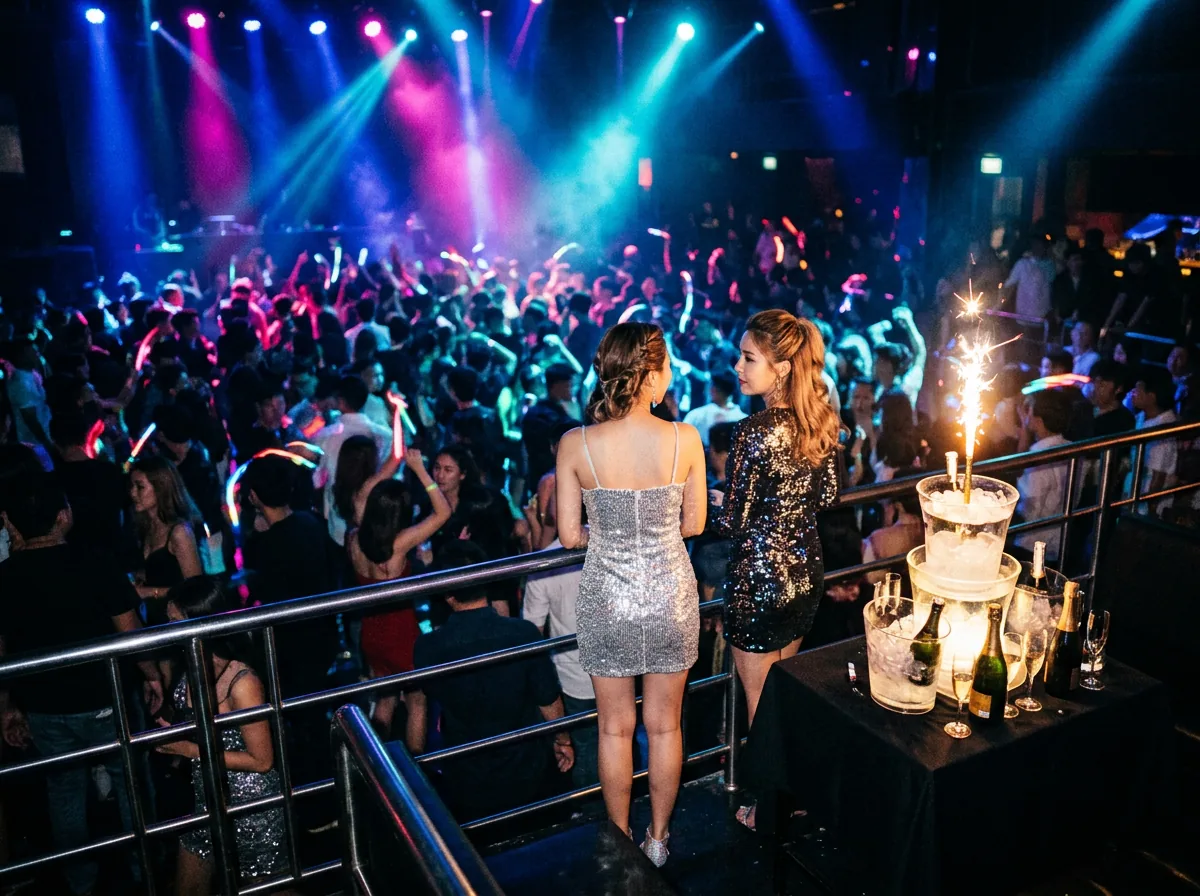
TABLE OF CONTENTS
- 1.What you are actually buying when you book a table
- 2.The table is not the product. The room is
- 3.Who holds a table, and who can move it
- 4.Minimum spend, explained without the number
- 5.Why the figure moves, and what moves it
- 6.What counts toward the spend and what does not
- 7.Deposits, holds and what a confirmation is worth
- 8.How many men actually fit on a table
- 9.The difference between a table, a booth and a private room
- 10.What time the room decides your night
- 11.Arriving as fourteen when you booked for twelve
- 12.The two men who do not show up
- 13.Who pays, and how the money is collected on the night
- 14.Splitting the bill without ruining the evening
- 15.Bottle service: what the ritual is for
- 16.Table service, the staff around it, and what they are doing
- 17.Dress code, and the part nobody tells you
- 18.Walking in without a table, and when that is the better call
- 19.When a table is the wrong purchase for your group
- 20.What a planner does that you cannot do from your phone
- 21.What to ask before you agree to anything
Someone in your group has said you should get a table. Before you agree, and before you ask eleven other men for money, it is worth knowing what a table actually is. It is not a seat. It is an arrangement with a room.
What you are actually buying when you book a table
A table is not a ticket, and it is not a restaurant reservation with better lighting. You are buying the right to occupy a defined piece of a room for a night, with staff attached to it and a commitment attached to you.
The seats are the least interesting part of it. What you are buying is position, service, and the near-certainty that twelve men who arrive together will still be together at two.
That is the whole mechanism, and everything else here follows from it. It is also the reason a table is the spine of what a planned night includes for most groups.

The table is not the product. The room is
A club sells its room in slices. Some slices see the whole floor, some see a wall, and one or two are where the night visibly happens.
You are buying a slice. The furniture is incidental — the same sofa in a different corner is a different purchase, at a different commitment, on the same night.
When a venue quotes you two options and one sounds inexplicably better value, that is usually what is being priced: not the table, the view of it.
Who holds a table, and who can move it
Tables are held by the venue's reservations or host team, and they are live assets — they get moved. A manager on the floor can shift a group, combine two tables, or open a slice that was not on the list an hour earlier.
That flexibility works for you as often as against you, but only if someone is talking to that manager. A booking made through a form talks to nobody.
Minimum spend, explained without the number
A minimum spend is a floor, not a fee. It says: across the night, this table will spend at least this much on drinks. Meet it and nothing else happens — you drank what you paid for.
It is not a deposit, not a cover charge, and not money that vanishes. It is the venue protecting the slice of room it has taken off the market for you.
The number itself moves constantly, which is why it is not printed here. What does not move is the shape of the commitment, and the shape is what you need in order to decide.
Why the figure moves, and what moves it
Five things move it: which night of the week, where in the room, how many of you there are, what season it is, and whether anything is on that night.
A Wednesday in the shoulder season and a Saturday in high season are different businesses in the same building. So are the front of the room and the side of it.
Ask for the current figure for your date, in writing, and ask what it would be one slice further back. The gap between those two answers is the most useful number in the conversation.
What counts toward the spend and what does not
This is where groups get caught. Bottles and mixers count. Service charge and tax usually sit on top. Entry, if there is any, may or may not be inside it. Food, where a venue serves food, is often counted separately.
So the honest question is not what is the minimum. It is: what counts toward it, and what is added after it.
Two venues quoting the same commitment can land a long way apart once that answer is on the table.
Deposits, holds and what a confirmation is worth
There are two states and they are not the same. A hold is a pencil line: the venue has written your name beside a table and will probably still be honouring it on the day. A confirmation is a hold with money behind it.
If nothing has been paid and nothing has been signed, you have an intention. Intentions survive quiet Tuesdays and evaporate on busy Saturdays.
Get the state in writing, and get it in the form the venue actually uses — a name, a date, a table, a headcount.
How many men actually fit on a table
The number a venue gives you is the number it can seat if everyone behaves like furniture. The real number is lower, because a third of your group will be standing, and two of them will be standing in the aisle.
For a group of twelve, a table quoted for twelve is tight and a table quoted for sixteen is comfortable. Nobody tells you that, because the tighter answer is the easier sale.

The difference between a table, a booth and a private room
A table is in the room. A booth is in the room with walls on two sides. A private room is not in the room at all — it is a space you close, with its own service, where the group can be loud without negotiating with strangers.
They solve different problems. A table buys you presence. A private room buys you control, which is why the last night of a trip usually ends up in one — for our groups, the private party room at The PIMP, the venue we work in most and which has run over a thousand parties of its own.
Deciding between them is a question about your group, not your budget.
What time the room decides your night
Every club has an hour where it turns from a bar with music into the thing people came for. Arrive an hour before it and the room is yours to settle into. Arrive an hour after it and you are twelve men negotiating your way to your own table.
Groups consistently underestimate this and treat a table as a thing that waits patiently. It does wait — but the room around it does not.

Arriving as fourteen when you booked for twelve
Two extra men is usually fine, and usually free, and usually nobody blinks. Four extra is a different table, and the time to find that out is not at the door.
Tell whoever holds the booking the day before. Venues are far more accommodating about a number they knew at four in the afternoon than the same number standing in front of them at midnight.
The two men who do not show up
The reverse is more common and less discussed. Groups shrink. Someone stays at the hotel, someone never makes it past the second bar.
A table booked for twelve that arrives as ten is still a table for twelve on the night — the room has already turned away the walk-in group that would have taken it, and that is the part of the arrangement you are really paying for.
That is not a venue being difficult. It is the thing you bought.
Who pays, and how the money is collected on the night
One card, one name, settled before the last hour. That is the arrangement that works, and every other arrangement is a version of it that goes wrong later.
Venues will run a tab against a card held at the table or at the desk. Whoever's card it is has taken on the group's commitment personally, and should know that out loud, in daylight, before anyone lands.
Splitting the bill without ruining the evening
Collect the money before the trip. Not on the night, not at the table, not in a corridor at one in the morning while someone explains that he only had two drinks.
The organiser pays the room and gets reimbursed from a pot that already exists. That is how the mid package, where a table night usually sits is structured, for exactly this reason.
The alternative is a man doing arithmetic in a nightclub, which no group has ever enjoyed.

Bottle service: what the ritual is for
The procession, the sparkler, the walk across the floor — it is theatre, and it is deliberate. It announces the table to the room, which is a good part of what a table is for.
It is also throughput. A room that sells bottles to tables moves drinks faster than a room that sells them one at a time at a bar, and the whole model rests on that.
Knowing it is a performance does not spoil it. It does mean you can decline the parade and keep the drink.
Table service, the staff around it, and what they are doing
Three people will orbit your table. A host, who owns the relationship and the list. A server, who owns the drinks and the tab. Security, who owns the boundary between your group and the rest of the room.
Learn which is which in the first twenty minutes. Almost everything you will want later — a change, a move, an extra place — is in the gift of the first of those three.
Dress code, and the part nobody tells you
Published dress codes are about shoes and shorts. Unpublished ones are about the group.
Twelve men arriving together are assessed as one unit, at the door, in about four seconds. One man in the group who has clearly been drinking since the airport is the group's problem, not his.
Any planner who tells you otherwise has never stood at a door at midnight.

Walking in without a table, and when that is the better call
For six men on a weekday, a table is often the wrong purchase. You will spend the evening guarding furniture you did not need in a room you could have walked into.
Small groups, early arrivals and quieter nights all argue for walking in. The argument flips at roughly ten men, or the moment your night has a fixed schedule attached to it.
When a table is the wrong purchase for your group
If what your group actually wants is to be loud together, a table in a busy room is a compromise and a private space is the answer. If what it wants is a long night across several places, a table anchors you to one of them.
And if the trip is already carrying a big night elsewhere — the Pattaya second night being the usual one — two table nights in three days is one more than most groups have the stamina for.
What a planner does that you cannot do from your phone
Three things, all of them boring and all of them decisive. Someone who knows which slice of which room suits a group of your size. Someone the venue's host answers on the night. And someone who briefs the room before you arrive, so twelve men walk in expected rather than explained.
That is the whole job, and it is most of why how we plan a Bangkok bachelor trip looks the way it does.

What to ask before you agree to anything
Six questions, in this order. What is the minimum spend for my date, in writing. What counts toward it and what is added on top. Which table, and where in the room. How many does it seat, honestly. Is this held or confirmed, and what confirms it. Who do I speak to on the night if something changes.
If a venue or an agent cannot answer all six in a single message, you do not yet have a booking. You have a conversation.
We answer all six before anyone is asked for a deposit, which is most of what who does the planning amounts to in practice. If you would rather not ask them at all, have the table booked for you and we will ask on your behalf.
Tell us the date and the headcount, and we will tell you what that room does on that night. Chat now.
FAQ
Do we need a table, or can we just turn up?
Below about ten men, on a weekday, arriving early, you can usually walk in and keep your money. Above that, or on a weekend, or if the night has a schedule attached to it, a table stops being a luxury and starts being the thing that keeps the group in one place.
What happens to the minimum spend if half the group leaves early?
Nothing changes. The commitment is against the table, not against attendance — the room took that slice off the market for the night. It is the single most common surprise, and the reason to size the table to the men who will genuinely still be there late.
Can we move to a private room later in the night?
Sometimes, and it depends entirely on whether anyone asked in advance. Decided beforehand it is a plan; asked at midnight it is a favour. If a private space is where your group wants to end up, book it that way from the start.
CONTINUE READING
MORE ENTRIES ↗